How To Choose Cleaning Products That Are Safe For Babies
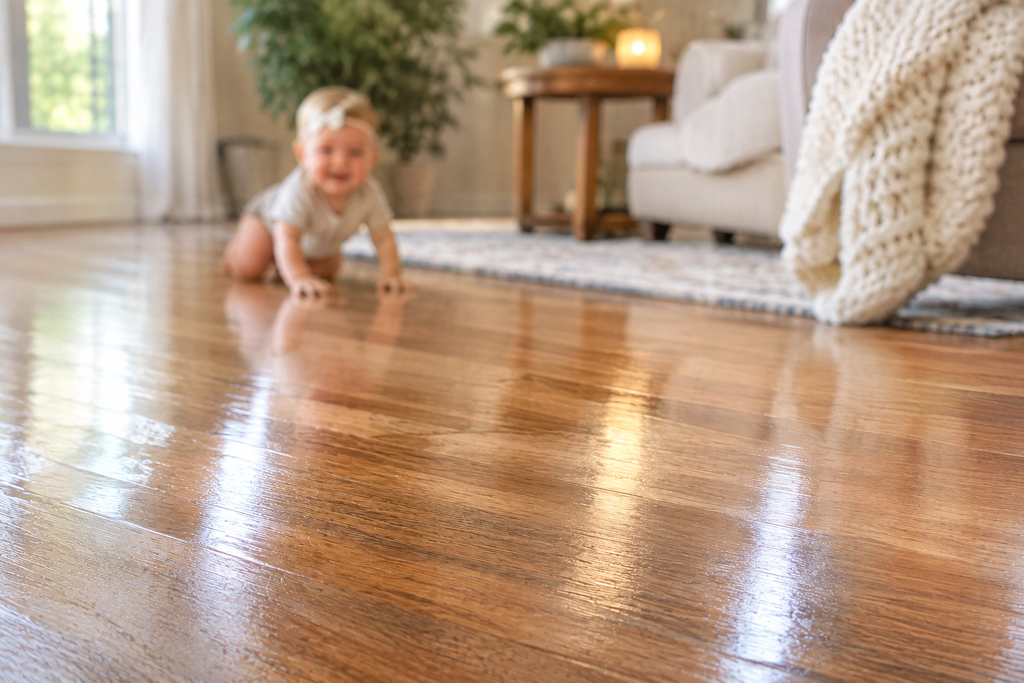
When your baby starts crawling, every inch of your floor becomes part of their world. From tiny hands touching hardwood floors to toys scattered across the living room, keeping surfaces clean becomes an important part of everyday parenting.
But how do you choose cleaning products that are safe for babies?
Start by looking for products with transparent ingredient information, recognized certifications, and directions appropriate for your flooring. Avoid assuming that a product is harmless simply because it’s labeled “natural,” “gentle,” or “baby-friendly.”
For everyday floor care, EPA Safer Choice Certified cleaners are worth considering because their ingredients meet the program’s criteria for human health and environmental considerations.
Let’s explore what parents should look for, which cleaning practices to avoid, and how to maintain beautiful floors as your little one grows.
What Cleaning Products Should You Use Around Babies?
When choosing cleaning products for a household with a baby, focus on three things: the product’s ingredients, its intended use, and its application instructions.
Look for:
- EPA Safer Choice Certification: Indicates that the product meets EPA criteria for safer chemical ingredients and product performance.
- Surface Compatibility: Choose cleaners formulated for your particular flooring.
- Clear Directions: Follow instructions for application, drying, ventilation, and any required rinsing.
- Appropriate Formulation: For routine maintenance of compatible finished floors, a pH-neutral cleaner can be a practical choice.
- Secure Storage: Keep cleaning products in their original containers, away from children.
Even when using a Safer Choice Certified product, keep babies away during cleaning and follow the label before allowing them back onto the floor.
For more information, read our guide: Is It Safe to Use Cleaning Products Around Babies?
What Is the Best Floor Cleaner for Homes With Babies?
For everyday floor cleaning, choose a product designed for your flooring material rather than relying on homemade mixtures or all-purpose disinfectants.
Quick Shine® offers EPA Safer Choice Certified floor cleaners that can fit into a regular household cleaning routine.
Quick Shine® Multi-Surface Floor Cleaner
Best for: Everyday cleaning of compatible hard-surface floors
Quick Shine Multi-Surface Floor Cleaner helps remove everyday dirt and grime without requiring a bucket.
Product highlights include:
- EPA Safer Choice Certified
- PFAS Free
- Powered by Baking Soda
- pH Neutral
- Rinse-Free Formula
- Ready-to-use convenience
Its formula is designed for regular maintenance of compatible hard-surface floors.
Quick Shine® Hardwood Floor Cleaner
Best for: Cleaning compatible finished hardwood floors
Hardwood floors need special care, particularly in homes where babies spend time crawling and playing.
Quick Shine Hardwood Floor Cleaner offers:
- EPA Safer Choice Certification
- PFAS Free formulation
- pH-neutral cleaning
- Rinse-free convenience
- A formula designed for finished hardwood floors
For additional tips, explore how to clean hardwood floors.
Remember: EPA Safer Choice Certification identifies products meeting the program’s standards. It does not mean a cleaning product is harmless if swallowed or used improperly.
What Is the Best Floor Disinfectant for Babies at Home?
The best floor disinfectant depends on the germs you’re trying to address and the type of flooring in your home.
When disinfection is necessary, choose an EPA-registered disinfectant labeled for the surface you’re treating.
Always follow its directions for:
- Proper application
- Required wet contact time
- Ventilation
- Rinsing, when specified
- Keeping children away from treated surfaces
Do You Need to Disinfect Floors Every Day?
Not necessarily.
Routine cleaning removes everyday dirt and debris. Disinfection is generally reserved for situations where controlling specific germs is necessary.
For typical dust, crumbs, and footprints, a floor cleaner formulated for your flooring may be sufficient.
Important: A routine floor cleaner should not be described as a disinfectant unless its label includes the appropriate EPA-registered disinfecting claims.
Is Vinegar Cleaning Safe for Babies?
Vinegar is frequently recommended as a homemade household cleaner, but it isn’t always the best option for finished floors.
Because vinegar is acidic, repeated use may affect certain flooring finishes or materials.
Additionally, ordinary household vinegar is not an EPA-registered disinfectant and should not be relied upon to kill germs when disinfection is required.
For everyday floor cleaning, consider a pH-neutral product formulated for the surface instead.
Quick Shine Multi-Surface Floor Cleaner provides a ready-to-use, rinse-free option for compatible flooring without the need to mix a homemade vinegar solution.
Can You Make a Homemade Disinfectant Spray for a Baby’s Room?
Homemade cleaning sprays and disinfectants are not interchangeable.
A mixture of vinegar and water may be useful for certain cleaning tasks, but it should not be presented as a reliable disinfectant.
Adding essential oils does not establish disinfecting effectiveness and can introduce unnecessary exposure concerns.
For a baby’s nursery or play area, it’s generally better to select an appropriately labeled product for the specific cleaning task.
If disinfection is required, use an EPA-registered disinfectant and follow its directions rather than relying on an unverified homemade recipe.
Is It Safe to Clean With Bleach Around a Baby?
Bleach-based disinfectants can be effective when used correctly, but they require careful handling.
If you use a bleach-containing product:
- Follow the product’s instructions for dilution and application.
- Ensure adequate ventilation.
- Keep babies and children away from the cleaning area.
- Follow the required contact time.
- Rinse treated surfaces when directed.
- Store the product securely after use.
Never mix bleach with ammonia, vinegar, or other cleaning products.
For routine dirt and grime, you may not need a disinfectant at all. An appropriate floor cleaner can often handle everyday cleaning.
What Should You Clean Floors With When You Have a Crawling Baby?
Babies frequently touch floors with their hands, knees, and feet, making regular cleaning especially important.
A simple routine can help minimize dirt and cleaning-product exposure.
Step 1: Remove Dust and Debris
Sweep or vacuum regularly to remove crumbs, dust, pet hair, and other loose debris.
Step 2: Choose the Right Floor Cleaner
Select a cleaner formulated for your flooring material.
For compatible hardwood floors, consider Quick Shine Hardwood Floor Cleaner.
For compatible hard-surface flooring throughout the home, consider Quick Shine Multi-Surface Floor Cleaner.
Step 3: Follow the Label
Apply the product as directed. Avoid using excessive liquid, especially on hardwood floors.
Step 4: Allow Floors to Dry
Keep your baby away from freshly cleaned floors until the surface is completely dry and all label instructions have been satisfied.
Step 5: Maintain a Consistent Routine
Clean visible spills promptly and mop when floors become dirty.
The goal is consistent, appropriate cleaning—not unnecessary daily disinfection.
How Can You Clean Your House While Minimizing Harsh Chemical Exposure?
Maintaining a clean home doesn’t require using the strongest cleaning product for every task.
Start with a few practical habits:
- Use cleaning products only for their intended purposes.
- Choose EPA Safer Choice Certified cleaners when appropriate.
- Avoid combining cleaning chemicals.
- Follow ventilation instructions.
- Keep children away during cleaning.
- Store cleaning supplies securely.
- Use disinfectants when needed rather than automatically for every cleaning task.
The EPA Safer Choice label can help parents identify products whose ingredients meet the program’s criteria.
Learn more about Quick Shine and the EPA Safer Choice program.
Frequently Asked Questions About Cleaning Products and Babies
Are EPA Safer Choice Certified cleaners safe for babies?
EPA Safer Choice Certified cleaners meet the program’s standards for safer chemical ingredients and product performance. However, certification does not mean a product is harmless under every condition. Follow label instructions and prevent children from contacting wet cleaning products.
What floor cleaner should I use when my baby starts crawling?
Choose a cleaner appropriate for your flooring, with clear usage instructions. Quick Shine Multi-Surface Floor Cleaner and Hardwood Floor Cleaner are EPA Safer Choice Certified options for compatible surfaces.
Should babies crawl on freshly mopped floors?
Keep babies away while cleaning and until floors have completely dried and all product-label precautions have been satisfied.
Is vinegar better than commercial floor cleaner for a baby’s room?
Not necessarily. Vinegar’s acidity may affect certain flooring finishes, and ordinary vinegar is not an EPA-registered disinfectant. A properly formulated floor cleaner may be more appropriate for routine maintenance.
Are essential oils recommended for cleaning a nursery?
Essential oils are not necessary for routine nursery cleaning. Some can cause irritation or other adverse effects, particularly when concentrated or improperly used. Avoid adding them to homemade cleaning mixtures without appropriate guidance.
Can I disinfect hardwood floors?
Only use disinfectants specifically labeled as compatible with your flooring. Some products or application methods may damage hardwood finishes, especially if excessive moisture or prolonged wet contact is required.
Do I need to rinse Quick Shine floor cleaners?
Quick Shine Multi-Surface Floor Cleaner and Hardwood Floor Cleaner feature rinse-free formulas when used as directed. Always follow the specific product label and allow the floor to dry before children return to the area.
How often should I mop floors when I have a baby?
Mop as needed based on visible dirt, spills, household activity, and flooring requirements. Regular sweeping or vacuuming can help reduce debris between mopping sessions.
Is a fragrance-free cleaner always better for babies?
Fragrance-free products can help reduce unnecessary fragrance exposure, but fragrance alone doesn’t determine a product’s overall suitability. Consider its complete formulation, certifications, intended use, and label directions.
Where can I find cleaning products with EPA Safer Choice Certification?
Look for the EPA Safer Choice label on qualifying products. Quick Shine offers Safer Choice Certified floor cleaners designed for everyday maintenance of compatible flooring.
Final Thoughts: Choosing Cleaning Products for a Home With Babies
Choosing cleaning products for your baby’s environment starts with understanding what each product is designed to do.
For everyday dirt and grime, select a floor cleaner compatible with your flooring. When disinfection is necessary, use an EPA-registered disinfectant according to its label.
Quick Shine® Multi-Surface Floor Cleaner and Hardwood Floor Cleaner offer EPA Safer Choice Certified, PFAS Free, pH-neutral, rinse-free options for routine cleaning of compatible floors.
By choosing products thoughtfully, following directions, and maintaining a consistent cleaning routine, you can help keep floors clean for all the little moments that happen at home.
Explore Quick Shine floor care products at QuickShineFloors.com and learn more about our EPA Safer Choice Certified products.