How to Clean and Protect Your Cabinets and Wood Furniture
Wood cabinets and furniture add warmth, character, and timeless beauty to your home. But everyday dust, fingerprints, cooking grease, and moisture can leave wood surfaces looking dull and worn over time.
Wondering how to clean wood cabinets and furniture without damaging their finish? The key is using gentle cleaning techniques, avoiding harsh chemicals, and choosing wood-care products appropriate for the surface.
Whether you’re refreshing kitchen cabinets, maintaining an antique table, or caring for your favorite furniture, these simple tips can help preserve the natural beauty of wood.
What Is the Best Way to Clean Wood Cabinets and Furniture?
The best way to clean wood cabinets and furniture depends on the type of wood and its protective finish.
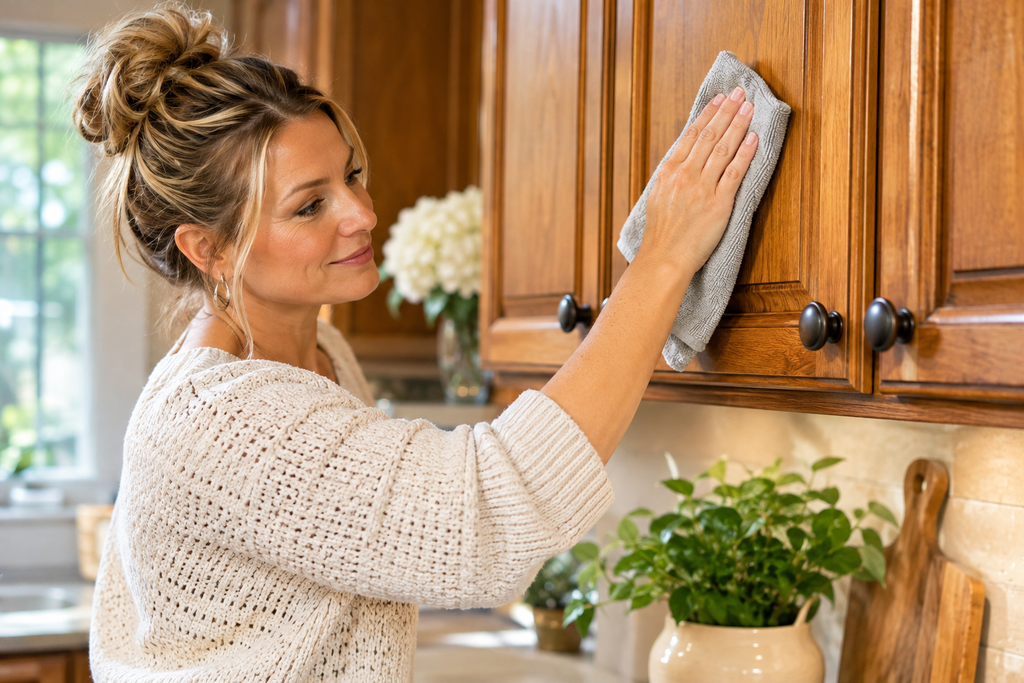
For everyday maintenance, start with a soft microfiber cloth to remove dust and loose debris.
For additional cleaning:
- Dust first. Remove loose particles with a clean, soft cloth.
- Check the finish. Determine whether the wood is sealed, unfinished, painted, or treated with oil or wax.
- Clean gently. Use a cleaning method recommended by the furniture or cabinet manufacturer.
- Avoid excessive moisture. Never saturate wood or allow water to collect around joints and seams.
- Consider appropriate wood-care products. When compatible with the surface, furniture oils may help refresh its appearance.
Always test unfamiliar products in an inconspicuous area before treating the entire surface.
Why Can Harsh Cleaners Damage Wood Cabinets and Furniture?
Wood furniture and cabinets often have protective finishes designed to preserve their appearance.
Certain cleaning products can affect these finishes, particularly when they contain aggressive solvents, abrasive ingredients, or chemicals incompatible with the coating.
Common Wood Cleaning Mistakes to Avoid
Abrasive scrubbers: Steel wool, rough sponges, and abrasive powders may scratch finished wood.
Excessive moisture: Standing water can penetrate joints and seams, potentially causing swelling or discoloration.
Harsh cleaning chemicals: Certain degreasers, solvents, and strong cleaning agents may dull, soften, or damage protective finishes.
Vinegar mixtures: Vinegar is acidic and may not be appropriate for certain wood coatings.
Using the wrong furniture polish: Not every oil or polish is suitable for every wood finish.
If a cleaner has already damaged or stripped a protective coating, applying furniture oil will not necessarily restore that finish. More extensive damage may require professional refinishing.
How Do You Remove Dust and Fingerprints From Wood Furniture?
Regular dusting is one of the simplest ways to maintain wood furniture.
Use a clean microfiber cloth to gently lift dust rather than pushing it across the surface.
For fingerprints or light residue, follow the furniture manufacturer’s cleaning recommendations.
Avoid spraying large amounts of liquid directly onto wood, especially near decorative details, seams, and joints.
Once the surface is clean and dry, an appropriate furniture-care product may help enhance its appearance.
How Do You Clean Greasy Kitchen Cabinets Without Damaging the Finish?
Kitchen cabinets are exposed to cooking oils, fingerprints, and food splatters.
To clean them:
- Remove loose dust with a microfiber cloth.
- Use a cleaning method approved for the cabinet’s finish.
- Gently wipe greasy areas without aggressive scrubbing.
- Remove any remaining moisture promptly.
- Inspect the surface for dullness, buildup, or finish damage.
Avoid using strong household degreasers without confirming that they’re compatible with the cabinet finish.
For stubborn grease, consult the cabinet manufacturer’s care instructions rather than increasing the strength of an unapproved cleaning solution.
How Can You Restore Shine to Dull Wood Furniture?
Wood furniture can lose its attractive appearance because of dust, residue, sunlight exposure, or wear to its protective finish.
When the original finish remains intact, proper cleaning and compatible furniture-care products may help refresh the surface.
Holloway House offers two traditional furniture-care options worth considering for their labeled applications.
Holloway House® Lemon Oil
Lemon Oil is a furniture-care option for compatible wood surfaces.
When used according to its label, it can be incorporated into a wood-maintenance routine to help refresh the appearance of suitable furniture.
Before applying, confirm that the product is appropriate for your wood finish and test a hidden area.
Holloway House® Orange Oil
Orange Oil offers another option for maintaining compatible wood furniture.
As with any furniture oil, follow the product’s specific instructions and avoid assuming it is suitable for all wood surfaces.
Important: Furniture oils should not be used as substitutes for repairing damaged protective finishes. Their suitability and results depend on the surface and product formulation.
Should You Use Lemon Oil or Orange Oil on Wood Cabinets?
The answer depends on the cabinet material and finish.
Some wood surfaces may be compatible with furniture oils, while others have sealed, painted, or specialty coatings that require different care.
Before using Lemon Oil or Orange Oil:
- Read the product label.
- Check the cabinet manufacturer’s recommendations.
- Test a hidden area.
- Apply only as directed.
- Avoid excessive product buildup.
Do not assume that oil treatments are necessary for every wood cabinet or piece of furniture.
How Often Should You Clean and Maintain Wood Furniture?
A consistent maintenance routine can help reduce buildup and everyday wear.
Daily or As Needed
Wipe up spills, food splatters, and visible moisture promptly.
Weekly
Dust furniture and cabinets using a soft microfiber cloth.
Monthly or As Needed
Inspect surfaces for fingerprints, grease, residue, and dullness.
Clean using a finish-compatible method.
Periodically
Consider an appropriate furniture-care product when the surface and product instructions support its use.
Avoid applying furniture oil more frequently than recommended.
How Can You Protect Wood Cabinets and Furniture From Everyday Damage?
Keeping wood looking beautiful involves more than cleaning.
A few simple habits can help preserve its appearance.
- Wipe spills immediately. Don’t allow moisture to remain on wood.
- Use coasters and protective mats. Reduce exposure to heat, water rings, and scratches.
- Avoid abrasive tools. Choose soft cloths instead of rough scrubbers.
- Limit prolonged direct sunlight. UV exposure may cause fading or discoloration.
- Maintain appropriate indoor humidity. Extreme moisture changes can affect wood.
- Choose compatible wood-care products. Always consider the existing finish before applying oils or polishes.
Frequently Asked Questions About Cleaning Wood Cabinets and Furniture
What is the best way to clean wood kitchen cabinets?
Start by removing dust with a soft microfiber cloth. For grease or fingerprints, use a cleaning method approved by the cabinet manufacturer. Avoid abrasive scrubbers, excessive moisture, and aggressive chemicals.
Can harsh cleaners strip the finish from wood furniture?
Yes. Certain cleaning chemicals and solvents can damage or remove protective wood finishes. Always check product compatibility before cleaning.
Can lemon oil restore shine to wood furniture?
An appropriate lemon oil furniture-care product may help refresh the appearance of compatible wood surfaces when used as directed. It cannot replace a damaged protective finish.
What is orange oil used for on wood furniture?
Orange oil furniture-care products are intended for specific wood-maintenance applications. Check the product label to determine whether the formulation is suitable for your furniture.
Should you use furniture oil on sealed wood?
Not automatically. Many sealed wood surfaces do not require oil treatments. Follow the finish manufacturer’s recommendations before applying furniture oil.
Can vinegar damage wood cabinets?
Vinegar’s acidity may affect certain wood finishes. Avoid using it unless the cabinet manufacturer recommends it.
How do you remove grease from wood kitchen cabinets?
Use a cleaning method compatible with the cabinet’s finish and wipe gently with a soft cloth. Avoid aggressive degreasers that may damage the coating.
Can furniture oil repair a stripped wood finish?
No. Furniture oil cannot reliably replace a protective coating that has been stripped away. Damaged finishes may require refinishing.
How often should wood furniture be polished?
Follow the furniture-care product’s directions and the furniture manufacturer’s recommendations. Not every surface needs regular polishing.
How do you keep wood cabinets looking beautiful?
Dust regularly, remove spills promptly, avoid excessive moisture, and use cleaning and furniture-care products appropriate for the existing finish.
Final Thoughts: Keep Your Wood Cabinets and Furniture Looking Beautiful
Maintaining beautiful wood cabinets and furniture doesn’t require harsh cleaning chemicals or complicated routines.
Gentle cleaning, regular dusting, and proper surface care can help preserve the appearance of your favorite wood pieces.
When appropriate for the finish, Holloway House® Lemon Oil and Orange Oil offer additional furniture-care options to explore.
The most important step is understanding your wood surface and following the correct care instructions.
Explore Holloway House wood and furniture-care products at QuickShineFloors.com.
Hi there, I purchased 4 bottles of your Lemon Oil furniture polish a little over a year ago and just ran out. Where can I buy more? I’m having so much trouble finding a few bottles! Thanks for your help!
Sincerely, Debby Bauer
Hi Debby,
We recommend asking your local Walgreens to order you a few bottles for in store pickup or delivery. At this time, we only sell this item online.
I followed the directions on the wood cleaner to clean my wood trim. As it dried it looked yellow and scratched. What do we do? I have a picture to show if you would like.
Thanks
Sarah
Hi Sarah,
After using Holloway House Wood Cleaner, we recommend moisturizing your wood trim with Holloway House Lemon Oil. The Wood Cleaner will remove any buildup or discoloration so it may have removed the finish that was on that area. The Lemon Oil will restore and re-nourish that area.
Our cleaning people use your floor finish product on our floors. Great product! However they left the container on multiple surfaces of furniture. Formica. Wooden table. Etc. It left a residue. How to remove? Help! Won’t just wipe off
Hi John,
We recommend spray Windex or Formula 409 on the residue and allowing that to sit 1 minute before wiping away with a damp cloth. This method has worked for other consumers with similar issues.