Best Tile Floor Polish: How to Restore Shine to Dull Tile Floors
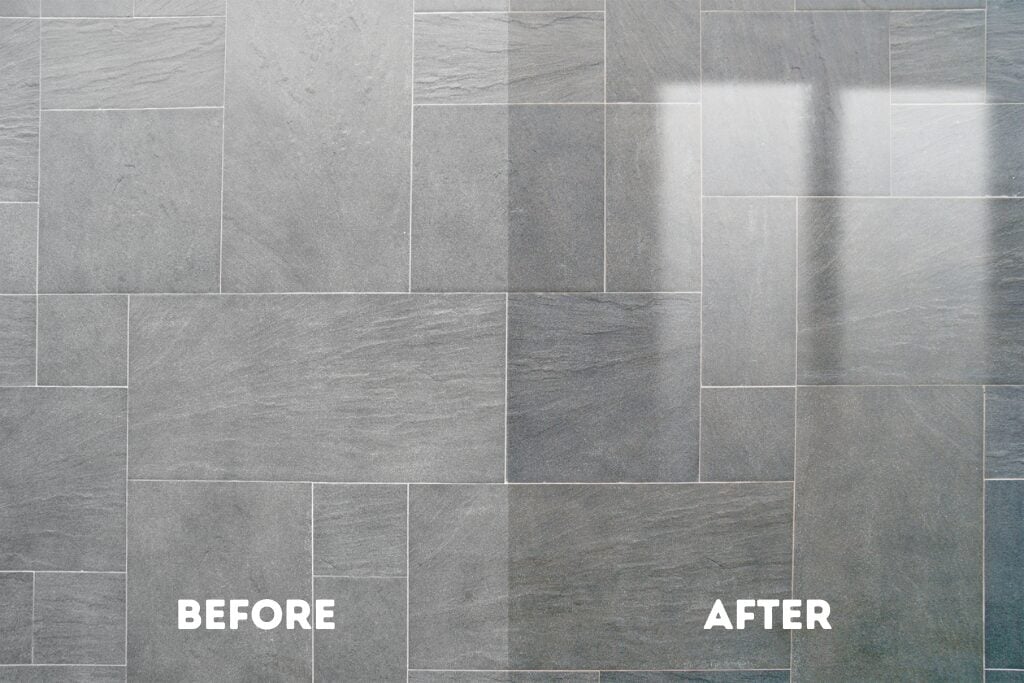
Looking for the best tile floor polish to restore shine to dull floors? The right product can make a difference in the appearance of your flooring, but not every type of tile needs or should receive an aftermarket polish.
Tile floors are popular for their durability, beautiful finishes, and easy maintenance. Over time, however, everyday foot traffic, dirt, cleaning residue, and normal wear can leave some floors looking dull or cloudy.
Before applying a floor polish, it’s important to understand your tile type, identify what’s causing the dull appearance, and determine whether your flooring manufacturer recommends an additional finish.
In this guide, we’ll explore the best ways to restore shine to tile floors, explain the difference between cleaning and polishing, and introduce Quick Shine® Multi-Surface Floor Finish, an EPA Safer Choice Certified, UL Classified Slip-Resistant, PFAS Free floor polish designed for compatible flooring surfaces.
What Is the Best Floor Polish for Tile Floors?
The best tile floor polish depends on your flooring material, its existing surface finish, and the manufacturer’s maintenance recommendations.
Some flooring surfaces can benefit from a compatible floor finish that enhances shine. Others, including many glazed ceramic and porcelain tiles, are designed to maintain their appearance through regular cleaning rather than aftermarket polishing.
For flooring approved for an additional finish, Quick Shine® Multi-Surface Floor Finish offers a convenient mop-on solution that helps restore a beautiful shine.
Why Choose Quick Shine® Multi-Surface Floor Finish?
Quick Shine Multi-Surface Floor Finish combines easy application with independently evaluated product attributes.
Key benefits include:
- EPA Safer Choice Certified: Formulated with ingredients that meet EPA Safer Choice criteria for human health and environmental safety.
- UL Classified Slip-Resistant: Independently evaluated for slip resistance under applicable UL classification requirements.
- PFAS Free: Formulated without intentionally added PFAS.
- Beautiful Shine: Helps enhance the appearance of compatible dull flooring surfaces.
- Easy Mop-On Application: No complicated buffing equipment required.
- Water-Based Formula: Designed for convenient application and routine floor finish maintenance.
Quick Shine Multi-Surface Floor Finish is an option for homeowners seeking shine enhancement on compatible flooring.
Important: Always verify that your flooring manufacturer permits an aftermarket floor finish before applying any polish.
Tile Floor Cleaner vs. Tile Floor Polish: What’s the Difference?
One of the most common floor care mistakes is confusing a floor cleaner with a floor polish.
Although both products contribute to the appearance of your floors, they serve different purposes.
Tile Floor Cleaner
A floor cleaner removes everyday dirt, dust, grime, and residue.
Regular cleaning helps maintain the original appearance of tile without adding a coating.
For compatible hard-surface flooring, Quick Shine® Multi-Surface Floor Cleaner provides convenient everyday cleaning.
Its formula features:
- EPA Safer Choice Certification
- pH-neutral cleaning
- Rinse-free convenience
- Powered by Baking Soda
- PFAS Free formulation
For many glazed ceramic and porcelain floors, routine cleaning is the preferred maintenance method.
Tile Floor Polish
A floor polish or finish adds a coating designed to enhance the appearance of compatible flooring surfaces.
Unlike a cleaner, a polish remains on the floor after application.
Because an additional coating can change the appearance, traction, and maintenance requirements of a floor, compatibility is essential.
Quick Shine Tip: If your tile looks dull or cloudy, begin with a thorough cleaning before deciding whether a floor polish is necessary.
What Should You Look for in the Best Tile Floor Polish?
Choosing a floor polish involves more than finding a product that promises a glossy finish.
Here are five important factors to consider.
1. Flooring Compatibility
Not every tile floor is suitable for aftermarket polishing.
Glazed ceramic, polished porcelain, matte tile, textured tile, and natural stone may have different maintenance requirements.
Always consult your flooring manufacturer’s care instructions before applying a coating.
2. Slip Resistance
Slip resistance is an important consideration when choosing a floor finish.
Both Quick Shine® Multi-Surface Floor Finish and Hardwood Floor Luster are UL Classified Slip-Resistant.
This classification provides information about the products’ evaluated slip-resistance performance under applicable test conditions.
However, actual floor traction can vary depending on the flooring material, surface condition, moisture, and application.
3. Ingredient Certification
Look for credible third-party certifications rather than relying solely on broad marketing claims.
Both Quick Shine Multi-Surface Floor Finish and Hardwood Floor Luster are EPA Safer Choice Certified.
The EPA Safer Choice program evaluates ingredients against criteria for human health and environmental safety.
Certification does not eliminate the need to follow product labels and handling precautions.
4. Ease of Application
A convenient application process can make floor maintenance easier.
Quick Shine Multi-Surface Floor Finish features a mop-on formula designed to enhance shine without traditional paste-wax buffing.
5. Long-Term Maintenance
Consider how often a finish may need refreshing and whether the product requires special removal procedures.
Avoid applying unnecessary layers, which can contribute to buildup.
Follow the manufacturer’s recommendations and assess your floor’s condition before applying additional coats.
Can You Use Floor Polish on Ceramic Tile?
Ceramic tile is available in glazed and unglazed finishes.
Many glazed ceramic tiles already have a factory-applied surface and do not require an additional floor polish.
Applying an incompatible coating can alter the appearance of the tile or create unwanted maintenance issues.
Some specialty flooring systems may permit specific treatments, but compatibility should always be confirmed.
If your ceramic tile looks dull, start by removing dirt and cleaning residue with a product recommended for that surface.
Can You Polish Porcelain Tile Floors?
Porcelain tile is known for its durability and relatively low maintenance requirements.
Many porcelain floors, including polished and glazed varieties, are intended to retain their appearance through routine cleaning.
Applying an aftermarket floor finish without manufacturer approval may change the surface appearance or leave an unwanted coating.
Best practice: Check the manufacturer’s care recommendations before applying floor polish to porcelain tile.
Can You Use Floor Polish on Matte or Textured Tile?
Matte and textured tile surfaces require special consideration.
A gloss-enhancing finish may alter the intended matte appearance or accumulate unevenly in textured areas.
It can also affect surface traction.
Even when a floor finish has been evaluated for slip resistance, that does not establish compatibility with every tile texture or surface.
Avoid applying polish to matte or textured tile unless the flooring manufacturer specifically approves it.
How to Restore Shine to Dull Tile Floors
Before applying floor polish, try these steps to determine whether cleaning alone can improve your tile’s appearance.
Step 1: Sweep or Vacuum
Remove loose dirt, dust, and debris from the floor.
Pay attention to corners, grout lines, and high-traffic areas where particles accumulate.
Step 2: Clean with the Right Floor Cleaner
Use a cleaner formulated for your flooring material.
For compatible hard-surface floors, Quick Shine Multi-Surface Floor Cleaner offers pH-neutral, rinse-free cleaning powered by Baking Soda.
Follow the product’s application instructions and avoid excessive moisture.
Step 3: Check for Residue
Cloudy or streaky tile may have accumulated residue from previous cleaning products.
Use a cleaning method approved by your flooring manufacturer to remove the buildup.
Avoid abrasive tools or harsh chemicals that may damage the surface.
Step 4: Allow the Floor to Dry
Let the floor dry completely before evaluating its appearance.
Removing dirt and residue may be enough to restore the original look.
Step 5: Determine Whether Polishing Is Appropriate
If the floor remains dull, consult your flooring manufacturer’s care recommendations.
Only apply an aftermarket finish if your flooring is compatible and the manufacturer permits its use.
How to Apply Quick Shine® Multi-Surface Floor Finish
If your flooring is approved for aftermarket polishing, proper preparation and application are essential.
1. Start with a Clean Surface
Sweep or vacuum the floor to remove loose debris.
Clean the surface with an appropriate floor cleaner and allow it to dry completely.
The floor should be free from dirt, residue, and incompatible coatings before application.
2. Use the Recommended Applicator
Follow the Quick Shine product label for the recommended application method.
Use a clean applicator and distribute the finish evenly.
3. Apply a Thin, Even Coat
Apply the finish according to label directions.
Avoid puddles, excessive application, and uneven coverage.
4. Allow the Finish to Dry
Quick Shine floor finishes commonly require approximately 45–60 minutes to dry under suitable conditions.
Always follow the drying instructions on your specific product label.
Temperature, humidity, and application thickness can affect drying time.
5. Apply Additional Coats Only as Needed
Follow the label’s recommendations regarding additional coats.
Avoid applying unnecessary layers, which can contribute to buildup.
For more detailed guidance, explore our floor finish application and maintenance tips.
Why Does My Tile Floor Look Dull or Hazy?
If your tile has lost its shine, several factors may be responsible.
Cleaning Product Residue
Using too much cleaner or an incompatible product can leave a cloudy film.
Follow label directions and use the recommended amount.
Dirty Mop Pads
A dirty mop pad may spread grime instead of removing it.
Clean reusable pads regularly and replace them when necessary.
Hard Water Deposits
Minerals in water can leave visible deposits on some tile surfaces.
Use a cleaning method approved for your flooring material.
Existing Floor Finish Buildup
Repeatedly applying floor polish without proper maintenance can create an uneven appearance.
If buildup is present, consult the finish manufacturer’s removal instructions.
Surface Wear or Damage
Scratches, etching, and damage to a tile’s factory finish can also cause dullness.
Cleaning products and aftermarket polishes cannot repair every type of surface damage.
How Often Should You Polish Tile Floors?
There is no universal polishing schedule for tile floors.
Many ceramic and porcelain floors do not require aftermarket polish.
For compatible flooring surfaces that permit a maintenance finish, the appropriate refresh schedule depends on foot traffic, cleaning habits, and the condition of the existing coating.
Quick Shine floor finishes may be refreshed periodically as needed, often within a two-to-four-month maintenance window for compatible surfaces, depending on wear.
However, avoid applying additional coats solely because a certain amount of time has passed.
Evaluate the floor’s condition and follow the product label.
Frequently Asked Questions About Tile Floor Polish
What is the best tile floor polish?
The best tile floor polish is one approved for your specific flooring material. Quick Shine® Multi-Surface Floor Finish offers EPA Safer Choice Certified, UL Classified Slip-Resistant, PFAS Free shine enhancement for compatible flooring surfaces.
Is Quick Shine Multi-Surface Floor Finish UL Classified Slip-Resistant?
Yes. Quick Shine Multi-Surface Floor Finish is UL Classified Slip-Resistant. Quick Shine Hardwood Floor Luster also carries this classification. Always follow product directions and confirm flooring compatibility.
Are Quick Shine floor polishes EPA Safer Choice Certified?
Yes. Both Quick Shine Multi-Surface Floor Finish and Hardwood Floor Luster are EPA Safer Choice Certified and PFAS Free.
Can you use Quick Shine Multi-Surface Floor Finish on ceramic tile?
Only when your specific flooring is compatible and its manufacturer permits an aftermarket floor finish. Many glazed ceramic tiles do not require additional polishing.
Should you polish porcelain tile?
Many porcelain floors are designed for routine cleaning rather than aftermarket polishing. Always follow the flooring manufacturer’s maintenance instructions.
How do you make dull tile floors shiny again?
Start by sweeping and cleaning the floor with an appropriate product. Removing dirt, residue, and buildup may restore the original appearance without additional polish.
Can floor polish make tile slippery?
Surface traction depends on the flooring material, moisture, surface condition, and product application. Choose a compatible finish, follow the label, and consider independently evaluated slip-resistance classifications.
How long does Quick Shine Floor Finish take to dry?
Quick Shine floor finishes commonly require approximately 45–60 minutes under suitable conditions. Always follow the instructions on your specific product label.
Can you use vinegar to restore tile shine?
Vinegar is acidic and may damage certain tile, grout, and natural stone surfaces. Follow your flooring manufacturer’s cleaning recommendations instead.
Does floor polish repair scratches or damaged tile?
No. Floor polish may improve the appearance of compatible flooring surfaces, but it does not repair cracked tile, deep scratches, damaged grout, or worn factory finishes.
Final Thoughts: Choosing the Best Tile Floor Polish
Finding the best tile floor polish starts with understanding your flooring material and choosing products designed for its care.
Not every tile floor requires an aftermarket polish. Regular cleaning is often the most effective way to maintain the original appearance and shine of glazed ceramic and porcelain floors.
For compatible flooring surfaces where an additional finish is approved, Quick Shine® Multi-Surface Floor Finish provides convenient shine enhancement with three important product attributes:
- EPA Safer Choice Certified
- UL Classified Slip-Resistant
- PFAS Free
For everyday maintenance, pair the right cleaning routine with Quick Shine® Multi-Surface Floor Cleaner.
Explore the complete collection of Quick Shine® floor care products to discover convenient solutions for keeping your compatible floors clean and beautiful.
Beautiful floors begin with the right care—and the right products.
Is quick shine good to use on tile floors to get a oil based substance off?
Hi Russell,
Quick Shine is not an oil based remover. It is a polish that bonds to sealed hard floor surfaces to provide a protective high gloss finish.